

Smart Meter Programme
Eskom is currently installing smart meters. The project started in 2025 and will end in 2029. Customers will be informed as and when their areas are next in line for replacement of their meters.
A smart meter is an electricity meter with a type of technology that allows customers to see consumption, enables consumers to budget their energy cost, and allows Eskom to remotely monitor and adjust the electricity supply, based on the needs of the utility at the time. Eskom will communicate the smart meter programme through a comprehensive education campaign to customers soon.
Eskom customers are advised to contact their local Eskom office and provide your latest contact details for the Eskom database. This ensures you don’t miss valuable information with regards to visits to your home for this roll out.
How do Smart Meters work?
Smart meters are technology that use real-time usage tracking, that, if connected with good signal, can do automatic readings and in so doing result in accurate billing.
Eskom is swopping out old meters for smart meters as it helps to balance the countries supply and demand. It will also support Eskom’s efforts to remove long-term load reduction. A smart meter does not guarantee the elimination of load reduction, but in the long term, it will support that aim. Smart meters strengthens the local infrastructure and goes a long way to reduce strain on transformers.
Why does Eskom do load reduction?
When the network is overloaded, due to too many illegal connections and electricity theft the infrastructure needs to be protected against the damage that is caused by this overloading. Eskom is making a concerted effort to limit load reduction, but it will only e fully ended if all communities work together to stop the theft of electricity.
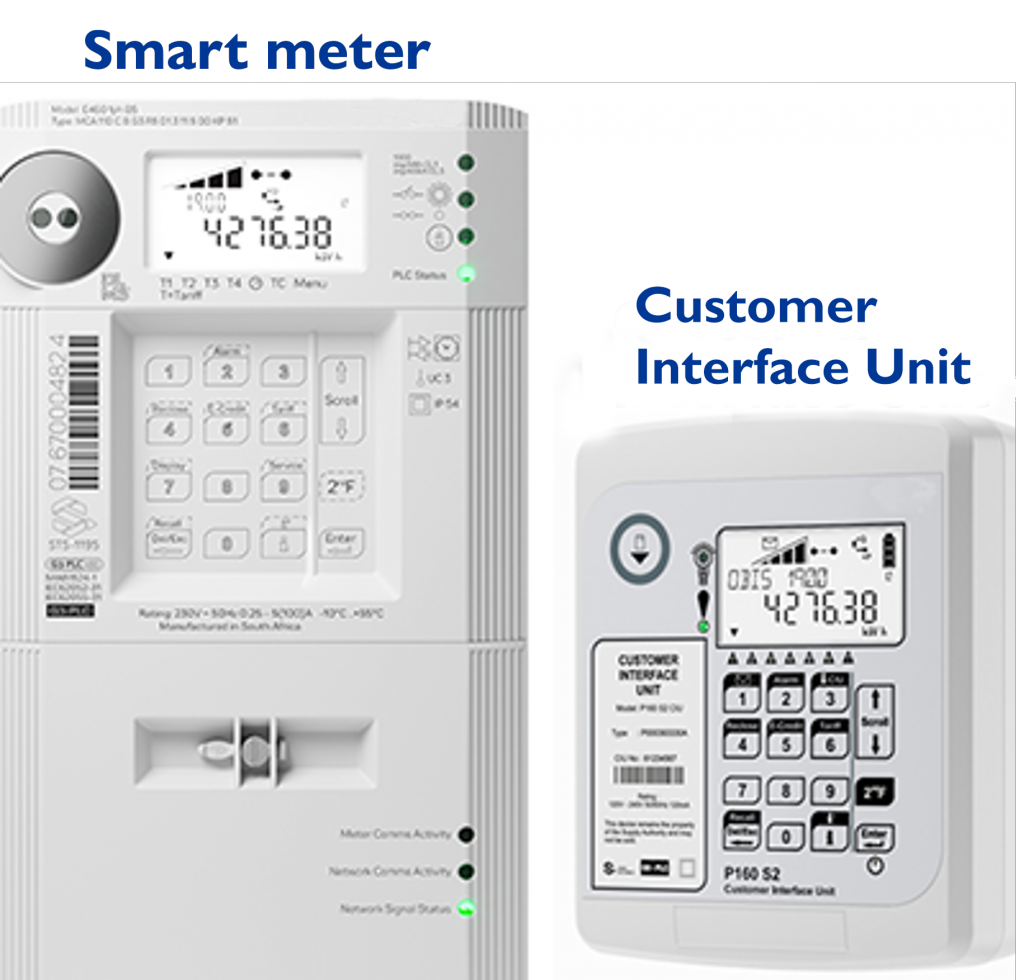
The benefits of smart meters for our customers:
- Instant control over their energy use.
- No more waiting for physical meter reading.
- Accurate billing – Eliminates estimated bills by providing exact usage data.
Eskom needs community partnerships
If community members report illegal connections, Eskom is able to protect its transformers from damage. Allowing smart meter installations to go ahead in all areas and working together with Eskom, a common goal of reliable, uninterrupted power supply will be achieve.
The benefits of smart meters for Eskom:
- Improved load management:
- Helps manage demand more efficiently.
- Remote monitoring and troubleshooting:
- Enables quick detection of outages and faults in the grid.
- Reduced operational costs:
- Reduces Eskom’s costs as no need for meter reading contracts and service calls.
- Better forecasting and planning:
- Detailed usage data supports better infrastructure planning and energy distribution.
Caution!
Customers are cautioned to only allow identifiable, confirmed contractors into their home to install their smart meter.
- Always make sure you have seen a smart meter roll out message in the media.
- Check that your area is currently having the roll out.
- Make sure that you check the authentic identification of anyone posing as an installer and wanting to enter your home.
Frequently Asked Questions
When will Eskom start rolling out fully enabled smart meters?
Eskom has started Eskom the rollout of smart meters and its 3 year programme expected to be concluded in 2029.
How many smart meters will be installed by end March 2026?
Eskom plans to install 800 000 smart meters in 2025/2026.
How many meters must Eskom replace in total?
6.2 million meters.
How does a fully enabled smart meter work?
A smart meter is an electricity meter with a type of technology that allows customers to see consumption, enables consumers to budget their energy cost, and allows Eskom to remotely monitor and adjust the electricity supply, based on the needs of the utility at the time.
How do I check if my smart meter is “fully enabled”??
Once you have indicated interest to participate, using the meter details, Eskom will verify on its system and provide confirmation on whether the smart meter is fully enabled for this initiative. Call 08600 37655 and speak to an agent.
What is the difference between a smart, split and traditional meter?
A traditional meter is a mechanical device that records only total electricity usage and requires manual readings, while a smart meter is a digital device that automatically sends detailed, real-time usage data to the utility. Smart meters enable two-way communication, more accurate billing, and support time-of-use pricing, whereas traditional meters offer no remote communication, provide limited information, and rely on periodic manual checks.
I am an Eskom customer, and I don’t want a fully enabled smart meter?
Eskom customers do not have the choice as to what technology is used to deliver their electricity to their homes. Eskom will be rolling out fully enabled smart meters to all its customers, and all old meters will become redundant and be removed.
How will I know when Eskom is coming to replace my old meter with a fully enabled smart meter?
1. Eskom will communicate the smart meter programme through a comprehensive education campaign to customers. Eskom will use one or all of the following to reach customers: regional radio, media releases, radio interviews, local flyers, Eskom Facebook and Eskom X posts, Eskom You Tube channel postes, community forums and Connect customer communiques. 2. Eskom customers are encouraged to follow Eskom social media platforms to stay updated: Twitter: @Eskom_SA https://twitter.com/Eskom_SA Facebook: @EskomSouthAfrica https://www.facebook.com/EskomSouthAfrica Instagram: @eskom_holdings https://instagram.com/eskom_holdings?igshid=YmMyMTA2M2Y= 3. Eskom chatbot Alfred will provide updated information as it becomes available. https://alfred.eskom.co.za/chatroom/ this is not available yet is it? 4. Eskom customers are advised to contact their local Eskom office and provide your latest contact details for the Eskom database. This ensures you don’t miss valuable information about visits to your home for this roll out. |
Will Eskom and its contractors need to access my home?
Eskom installs smart meters without entering the customer home in most cases, except when the existing meter or CIU is inside the home. Contractors may have to enter customer homes to test that their meters are in operation and to hand over the CIU.
What about the electricity units left on my old meter before the old meter is replaced with a smart meter?
The remaining credit in the old meter will be transferred to the customer’s new meter.