

Safe Solar starts here… Eskom is committed to protecting you, your home, and the electricity network. Registering your Small Scale Embedded Generation system like PV solar adds an extra layer of safety and ensures everything is installed and tested by accredited professionals.
Why registration matters?
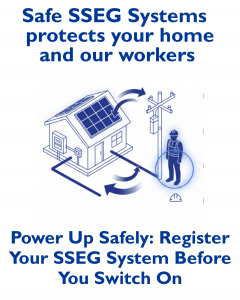
We care about your safety — and the safety of everyone working on the network. Small Scale Embedded Generation systems, like PV Solar systems, that operate in parallel with the grid can cause risks if not properly installed and tested. Registering helps Eskom confirm that your system is safe, compliant, and won’t put your home or our workers in danger.
Potential risks of unregistered systems:
They can back-feed electricity into lines during faults.
They may endanger electrical workers doing maintenance.
They can damage household appliances and Eskom equipment.
They may disturb voltage and reduce power quality for your neighbourhood.
How to register:
Step 1: Submit your details Online
Step 2: Upload your compliance documents
Step 3: Receive Approval and Smart Meter Installation
We schedule your meter installation at no cost to you. Start my free registration
Alternatively you can call Eskom contact centre on 08600 37566 or email the relevant province
Kindly ensure that your email has the relevant email subject heading i.e. #SSEG Application
[email protected]
[email protected]
[email protected]
[email protected]
[email protected]
[email protected]
[email protected]
[email protected]
[email protected]

Who needs to register:
All households and small businesses with systems below 100kVA must register with Eskom, even if they do not export electricity.
Customers who are fully off-grid and not connected to Eskom’s network are exempt, provided they can prove full independence from Eskom’s supply.
o Eskom Registration only – up until a 100kVA
o Eskom and NERSA registration -above 100kVA to 1 MW
Click here for Embedded Generation Installation (EGI) report


It is a legal requirement for connecting your solar to the Grid, all SSEG above 100 kVA must be registered with NERSA, and SSEG up to 100 kVA must be registered with the electricity distributor. Also, for safety reasons.
Solar systems that run parallel with the electricity network can:
– Back feed lines
– Endanger workers
– Damage equipment
– Disturb voltage and power quality
All households and small businesses with systems below 100kVA must register with Eskom, even if they do not export electricity.
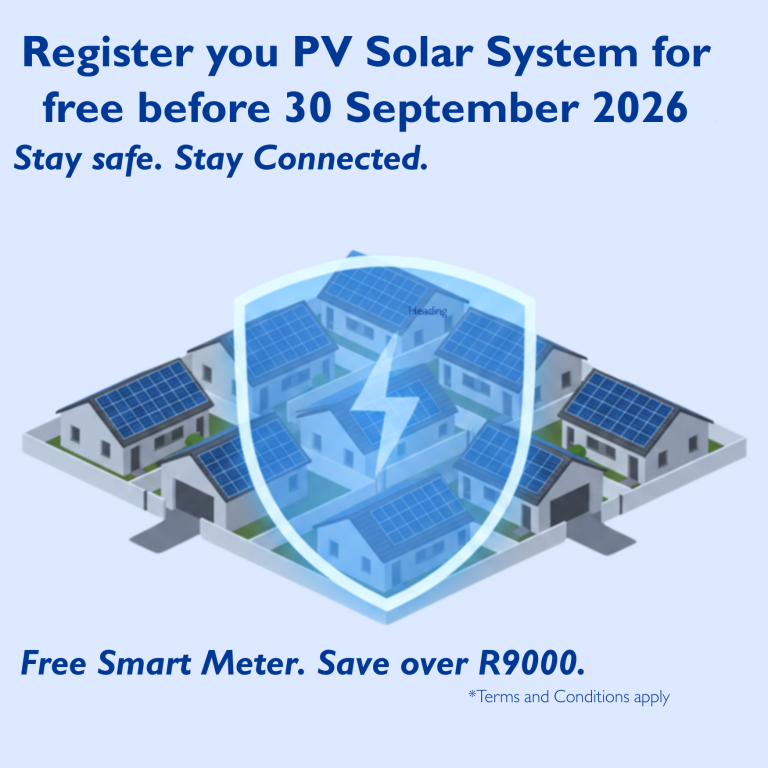
- No registration or connection fees for systems up to 50kVA until 30 September 2026.
- Typical residential customers can save over R9 000 in quotation, connection costs, smart meter and tariff conversion cost.
- No smart meter fees for systems up to 50kVA.
- Non-residential customers continue to benefit from reduced connection charges.
Only three key documents are needed:
- A valid Certificate of Compliance (CoC) signed by the registered persons,
- A NRS097-2-1 type test certificate for the inverter as provided by the equipment supplier and
- A basic Embedded Generation Installation (EGI) test report can now be signed by the DoL registered persons. (Installation Electrician or Master Installation Electrician, excluding single-phase testers) and no more limited to only the ECSA registered professionals.
Customers who are fully off-grid and not connected to Eskom’s network do not have to register, just declare and provide proof of full independence from Eskom’s supply.
Regulation and Registration
Do I need to register my SSEG system?
Yes. By law (Electricity Regulation Act), all grid‑tied SSEG systems must be registered in addition to meeting the technical requirements of the distributor (Eskom or a municipality). Those above 100kW will require registration before a connection and supply agreement can be concluded with Eskom or their local electricity supplier. This is required by law to keep customers, technicians and the electricity network safe. Registration helps Eskom ensure the system is installed correctly and will not cause harm.
What does the law say in simple terms?
The law requires that systems comply with safety standards, are connected at an approved point, and appear in the electricity distributor’s register.
What are the NERSA Rules about?
NERSA’s Rules explain how distributors must keep a register of SSEG systems under 100 kW. These Rules require customers to register their systems and provide proof of safety and technical compliance. They also allow Eskom to act if a system is unsafe, with disconnection.
Why is Eskom asking for registration even if I do not export electricity?
Any generator that is connected to the grid affects power flows. Even if you do not export, Eskom must know about your system for safety reasons and to ensure proper operation of the grid.
Do off grid systems need to register?
No. If your system is completely stand‑alone and never connects to the Eskom network, registration is not required by Eskom.
Grid Safety and Technical compliance
Why does Eskom need to check my installation?
Safety is the main reason. Unknown grid‑tied generators can energise lines unexpectedly. This is dangerous for households, technicians and the community. Eskom checks installations to keep everyone safe.
What safety and technical requirements apply?
Your installer must be a competent and legally registered person. The system must comply with national standards such as the Grid Code, NRS specifications, SANS wiring codes and the Occupational Health and Safety Act. Equipment like inverters must have proper test certificates.
What happens if a grid tied system is connected without approval?
Unauthorised grid‑tie connections may be disconnected. Tamper fees may apply where meters are reversed or bypassed. Eskom always tries education and support first. Disconnection happens only if safety risks remain.
Does Eskom fine customers for not registering?
No. Eskom has not fined customers for non‑registration. The only fines issued have been for electricity theft such as meter tampering.
Metering Options
What meter do I need if I want to export?
A bi‑directional meter which is typically a smart meter for smaller installations is required. This meter measures both the electricity you use and the electricity you export. Eskom installs this meter once your application is approved.
Can prepaid meters export?
Post‑paid export metering is fully available. Prepaid metering is being prepared to ensure tariffs, billing and vending work correctly. Prepaid customers who want to export may need to move temporarily to a supported post‑paid option.
SSEG Tariffs and cost considerations
How will I be credited for electricity I export to the grid?
If you are legally connected and on the correct tariff, credits appear on your monthly Eskom bill based on the time‑of‑use period in which you exported. These credits reduce the energy portion of your bill.
Is the credit rate the same as what I pay?
Export (Offset) credits are only on the variable energy rate component of the tariff. These tariffs are annually updated after the normal NERSA approval process.
Do SSEG customers still pay for using the grid?
Yes. All customers pay for the fixed services needed to deliver power safely and reliably. These charges support infrastructure, maintenance, voltage control and system reliability. SSEG customers still use the grid when their system produces less energy or at night, so a fair contribution is required.
Can electricity exported at one site be used at another?
There are options such as consolidating point of delivery on the same feeder while wheeling is possible for customers on MV and HV networks. These options depend on technical and regulatory conditions and are assessed case by case.
Agreement and Contractual Matters
What agreements will I need?
To connect legally, you need an active Electricity Supply Agreement, the required Supplementary Agreements for SSEG, and any tariff amendments are needed for export credit or banking.
Do I need an Eskom account to connect an SSEG system to the grid ?
Yes. All grid‑tied SSEG installations must be linked to an active Eskom customer account.
Can I be paid for energy exported?
You receive credits on your bill under the approved tariff structure. Eskom does not make cash payments for exported energy but provide a credit on the bill.
Cost considerations
What does an SSEG connection cost?
Costs vary by site and are based on the work required. Your quotation will show all connection, metering and tariff conversion costs. The quotation, connection and smart meter fees are about R10,825.93 plus vat.
Are there incentives or fee waivers?
Eskom offers a registration incentive campaign until 31 March 2026 which provides relief on quotation, connection and smart metering costs for eligible customers up to 50kVA. This is aimed at helping households and small businesses connect safely.
Will my deposit change if I move to a TOU tariff?
Deposit assessments are handled on case by case. Information about your expected savings or your load profile may help the assessment of the new or revised deposit.
Safety
How does SSEG improve safety if installed correctly?
A registered and compliant system makes sure the inverter shuts off automatically during outages, preventing dangerous back‑feed onto the grid. Compliance protects your home, your equipment and Eskom staff.
Where must my batteries be installed?
Follow your supplier’s instructions for safe placement. Batteries must be installed safely, with good ventilation and fire protection where required.
General Information
General
Can any technology be used?
Many technologies can qualify, including solar PV, wind, biomass, hydro, biogas, fuel cells and battery storage.
Will SSEG help reduce load shedding?
SSEG reduces pressure on the grid and helps improve resilience but it must be safe, registered to contribute positively.
Can I build a bigger system to charge my batteries?
This depends on your connection and the network limit at your site. Eskom will assess the total generation you propose, including the portion used for battery charging.
Eskom Contact Centre: 08600 37566
Useful links
Find Qualified Electrician in South Africa https://electrician.org.za/