


Eskom sustains stable electricity supply, improves EAF by 5.75% year-on-year and removes more than one million customers from load reduction
Friday, 03 July 2026: Eskom continues to realise the benefits of its operational recovery initiatives, maintaining a stable and reliable power system despite rising winter electricity demand. Continued improvements in generation performance under the Generation Recovery Plan, including increased generation availability, reduced unplanned outages and enhanced operational reliability, are enabling the utility to consistently meet demand while maintaining sufficient reserves and operational flexibility.
At the same time, Eskom continues to make strong progress in its Load Reduction Eradication Programme. To date, approximately 1 099 430 customers have been removed from load reduction schedules, representing 65% of the 1.69 million customers targeted under the programme. Originally established to address load reduction affecting 23.5% of Eskom’s 7.2 million customer base, the programme has reduced the proportion of customers affected by load reduction to approximately 8.3%. Load reduction has now been fully eliminated in five provinces, with Eskom remaining on track to achieve elimination in seven provinces by October 2026 and nationally by 2027.
The benefits of Eskom’s Generation Recovery Plan continue to translate into stronger operational performance, with the Energy Availability Factor (EAF) reaching 64.29% for the financial year-to-date (1 April to 2 July 2026), up from 63.81% in the previous week and significantly higher than 58.54% recorded over the same period last year, an improvement of 5.75% year-on-year. This reflects sustained progress under Eskom’s turnaround strategy, including a 9.64% improvement (4.9GW) compared to the corresponding period three years ago, driven by a continued reduction in unplanned outages and more consistent, reliable performance across the generation fleet.
Between 26 June and 2 July 2026, average unplanned outages declined to 9 850MW, compared to 14 981MW during the same period last year, representing a reduction of 5 131MW—more than the generating capacity of a large power station such as Kusile. This sustained improvement is also reflected in the Unplanned Capacity Loss Factor (UCLF), which significantly improved to 20.69% from 31.33% in the corresponding period last year, underscoring the continued gains achieved through Eskom’s Generation Recovery Plan.
Between 26 June and 2 July 2026, planned maintenance remains aligned with Eskom’s reliability and sustainability objectives, with the Planned Capacity Loss Factor (PCLF) averaging 9.01%, higher than 7.08% in the corresponding period last year.
Eskom continues to maintain additional system capacity, with 4 844MW in cold reserve due to excess capacity, providing further assurance of system adequacy.
No diesel was utilised during the reporting week, resulting in zero diesel expenditure. For the financial year to date (1 April to 2 July 2026), diesel expenditure remains at R746.41 million, with a load factor of 1.34%, compared to R4.86 billion and 10.90% during the same period last year. This reflects an 84.65% reduction in diesel costs, underscoring stronger generation performance and significantly lower reliance on diesel-fired generation.
This sustained reduction highlights both cost savings and the operational improvements achieved through Eskom’s Generation Recovery Plan, contributing to greater efficiency in system operations.
South Africa has recorded 413 consecutive days without loadshedding since 16 May 2025. During the previous financial year, supply interruptions were limited to 26 hours across four days in April and May 2025.
Demand continues to be met, with the highest sustained demand this week reaching approximately 27 326MW, and at one point the instantaneous peak was 27 679MW. Today’s evening peak is forecast at 26 698MW, against available capacity of 31 590MW. We are expecting 3 809MW to come back online ahead of the evening peak on Monday, 06 July 2026.
Eskom’s Winter Outlook, published on 22 April 2026 for the period 1 April to 31 August 2026, continues to project no loadshedding, based on sustained improvements delivered through the Generation Recovery Plan.
Key Performance Highlights
- For the financial year to date (1 April to 2 July 2026), UCLF has reduced to 22.40%, which is 7.17% lower than the same period in the previous year.
- For the financial year to date (1 April to 2 July 2026), planned maintenance was at an average of 6 194MW, accounting for 13.10% of total generation capacity, higher than the 11.40% (5 358MW) over the same period in the previous year.
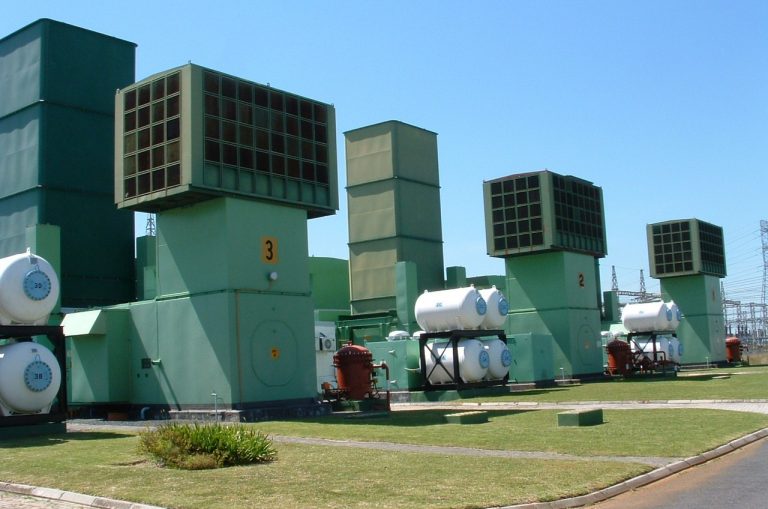
- Year-to-date (1 April to 2 July 2026), OCGT generation remains unchanged from last week at 101.396GWh, approximately 87.69% lower than the corresponding period last year. The continued low utilisation of OCGTs reflects improved fleet performance and reduced reliance on diesel-fired generation to meet electricity demand.
- The financial year‑to‑date OCGT load factor stands at 1.34%, lower than the 10.90% recorded over the same period last year and well below the target annual load factor of 3%. This targeted level is approximately half of the FY2026 target, reflecting increased confidence in improved fleet performance and reduced reliance on diesel‑fired generation.
Progress in ending load reduction: About 1 099 430 customers across South Africa are no longer impacted, representing about 65% of targeted households, with full elimination in five provinces.
Although the power system remains stable and generation capacity continues to exceed demand, illegal connections and meter tampering persist in certain localised areas, driving infrastructure damage and posing serious safety risks. Eskom continues to implement load reduction as a temporary, targeted measure in high-risk areas to protect both communities and the electricity network.
To address these challenges sustainably, Eskom has launched a phased programme to eliminate load reduction by 2027. The programme targets 971 feeders and will benefit approximately 1.69 million customers across all provinces, out of Eskom’s total customer base of 7.2 million. Key interventions include the rollout of smart meters, the integration of Distributed Energy Resources, and the expansion of Free Basic Electricity (FBE) support. These measures will be accompanied by targeted customer education initiatives.
Progress on Key Interventions
Smart Meter Rollout:
Eskom has deployed 1 861 180 smart meters nationwide. Of these, 472 100 have been installed on load reduction feeders, representing approximately 25% of installations in high-priority areas.
Approximately 93% of these installations are concentrated in Gauteng, Mpumalanga, Limpopo and KwaZulu-Natal, where network pressure is highest. The rollout remains focused on high-loss areas impacted by illegal connections, infrastructure overloading and electricity theft.
Despite ongoing stakeholder engagement, including work with ward councillors, public meetings and media platforms, resistance in some areas continues to affect progress. These include safety incidents, intimidation and work stoppages, resulting in delays, with over 122 000 planned installations impacted to date.
Feeders removed from Load Reduction:
A total of 544 feeders have been removed from load reduction, representing approximately 56% of the 971 target.
- 151 feeders in Limpopo and Mpumalanga (exceeding the target 150), with Mpumalanga achieving full elimination
- 244 feeders in Gauteng (40% of the target of 604)
- 12 feeders in the Eastern and Western Cape (80% of the target of 15), with the Western Cape achieving full elimination
- 123 feeders in the Free State and KwaZulu-Natal (63.7% of the target of 193), with the Free State achieving full elimination
- 14 feeders in the North West and Northern Cape (exceeding the target of 9), with both provinces achieving full elimination
Customers Benefiting:
An estimated 1 099 430 customers are no longer impacted by load reduction, representing approximately 65% of the 1.69 million customers targeted under the programme. This includes 608 099 customers in Limpopo and Mpumalanga; 268 902 in Gauteng; 16 080 in the Eastern and Western Cape; 160 916 in KwaZulu-Natal and the Free State; and 45 433 in the North West and Northern Cape.
Free Basic Electricity (FBE):
A total of 571 589 customers are registered for Free Basic Electricity, reflecting approximately 18% increase from the baseline of 485 000. This represents approximately 28% of the 2.1 million eligible customers.
Eskom continues to strengthen the network through targeted interventions, technology deployment and community engagement.
Eskom is calling on all affected communities to partner with its teams to help accelerate the elimination of load reduction, in line with planned timelines or sooner where possible.
Customers are encouraged to report illegal connections and infrastructure damage to the Eskom Crime Line at 0800 112 722 or via WhatsApp at 081 333 3323.
Eskom data sources
The Eskom data portal provides a 24/7 365 snapshot of system performance. [Eskom Data Portal].
Since May 2024, Eskom has released a detailed power system update every Friday, providing a consolidated view of key areas of its performance through the Media Desk and across its social media platforms. This is a deliberate effort to improve transparency.
Eskom will provide its next update on Friday, 10 July 2026, or communicate any significant developments as they occur.
ENDS